
 The Charter of the French language and its regulations govern the

Last modified: 03 June 2025
DISCLAIMER: This English version is translated from the original French. In case of any discrepancy, the French version shall prevail.
| Author: | Beauchamp, 2020 |
| Age: | Neoarchean |
| Stratotype: | Type outcrops 18-OG-8048 and 18-OG-8049 are located 2.5 km south of the west shore of Lépante Lake |
| Type area: | Cadieux Lake area (NTS sheets 33A02 and 33A07) |
| Geological province: | Superior Province |
| Geological subdivision: | La Grande Subprovince |
| Lithology: | Peridotite, pyroxenite, hornblendite and gabbro |
| Category: | Lithodemic |
| Rank: | Suite |
| Status: | Formal |
| Use: | Active |
None
Background
Some ultramafic intrusions were first mapped by Hocq (1985) in NTS sheet 33A02, but the Sorbier Mafic-Ultramafic Suite was not introduced until 2018, after the geological mapping campaign in the Lake Cadieux area (sheets 33A02 and 33A07; Beauchamp, 2020). Following the mapping campaign in the Lake Caulincourt area, Chartier and Saint-Laurent (2024) extended the Sorbier Mafic-Ultramafic Suite to the west (sheet 33A03).
The Sorbier Mafic-Ultramafic Suite is named after the eponymous lake located in the NW corner of sheet 33A02.
Description
The Sorbier Mafic-Ultramafic Suite consists of a group of intrusive rocks whose composition varies from peridotite, pyroxenite, hornblendite to gabbro. On geophysical maps, these intrusions are generally associated with strong positive magnetic anomalies. They form elongated and lenticular bodies that cut the metasedimentary rocks of the Prosper Formation. This string of mafic-ultramafic rocks, included in the Eastmain-Sorbier Shear Zone, Crozier Structural Domain and Mabille Structural Domain, forms small deformed, discontinuous and boudinaged intrusive bodies.
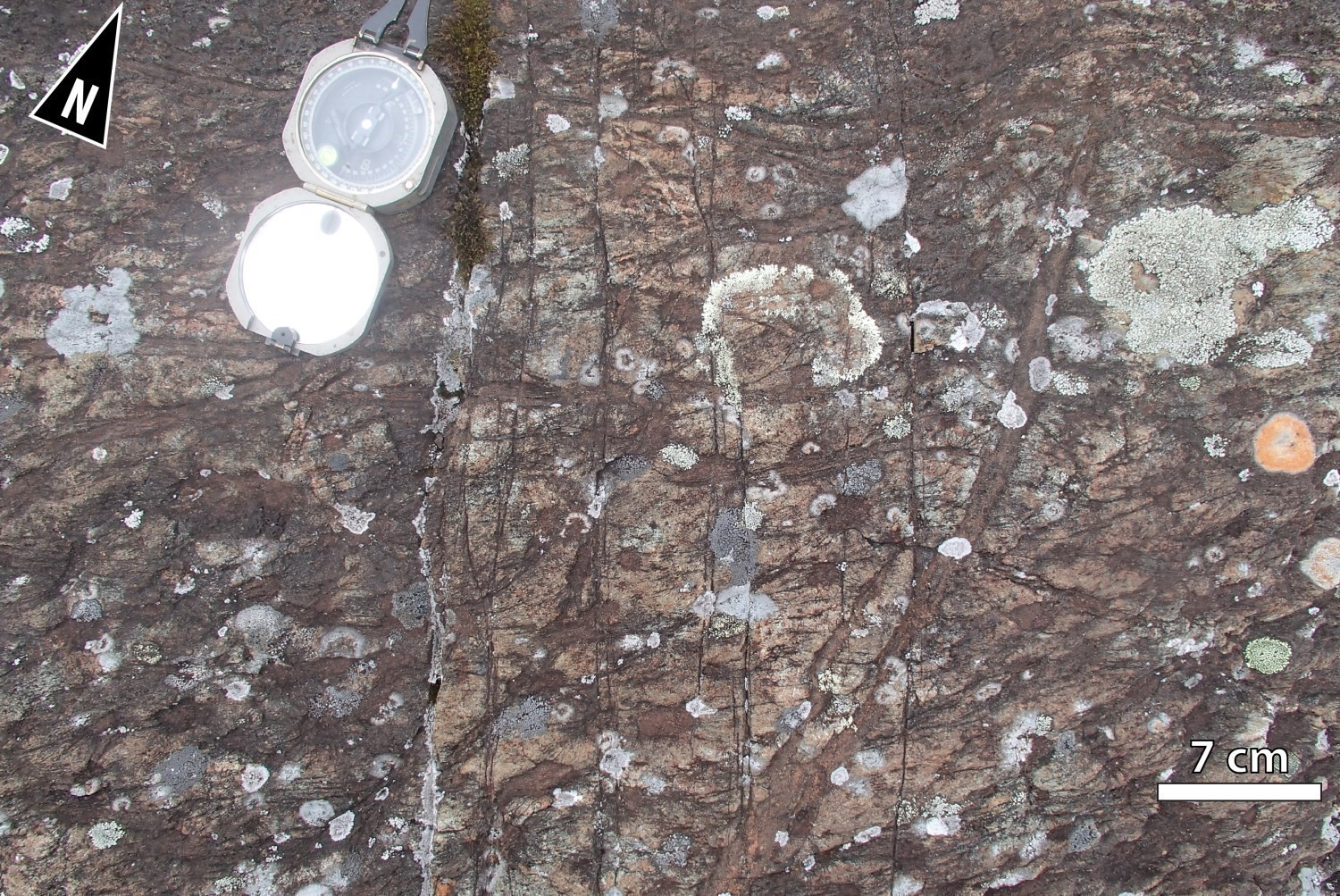
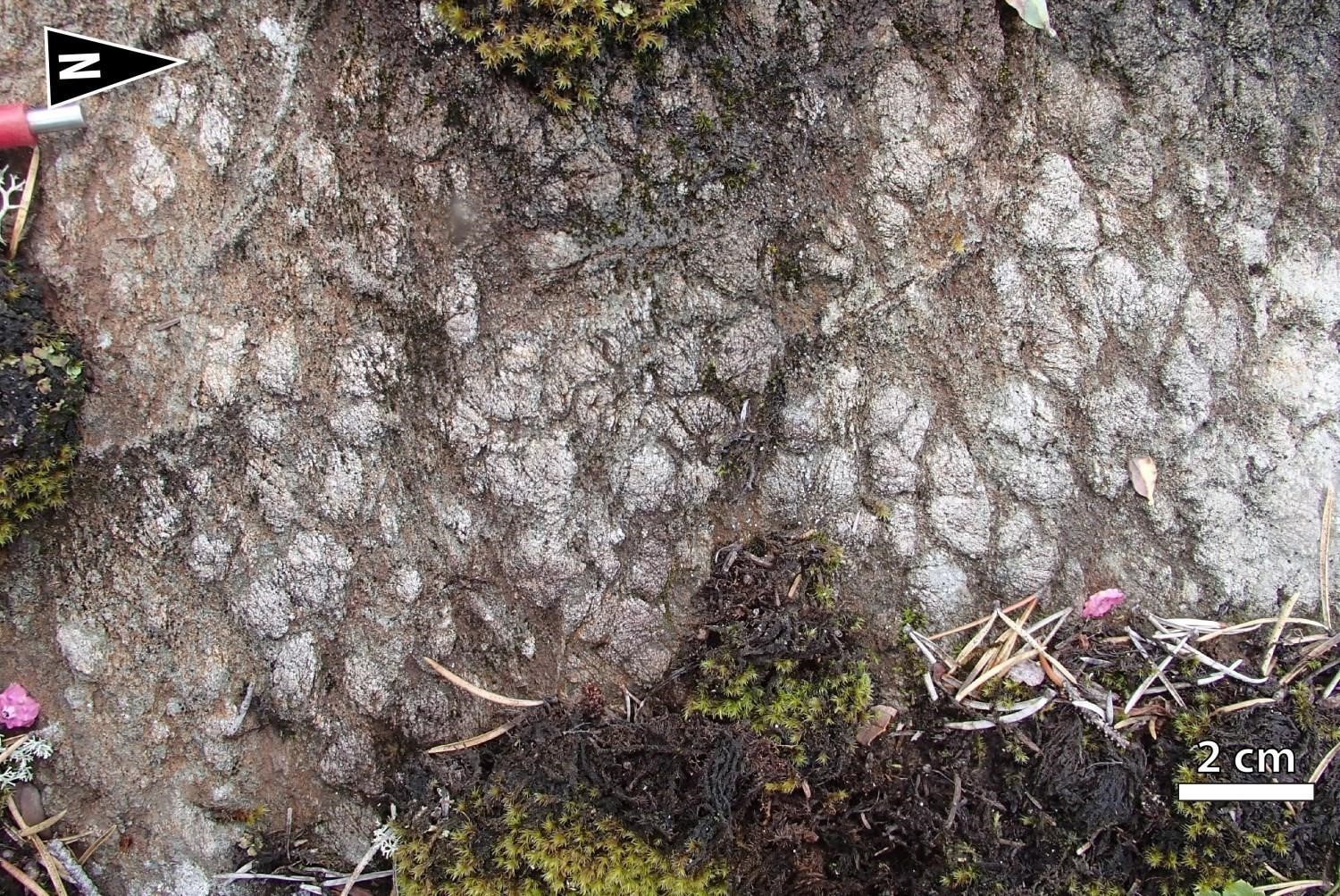
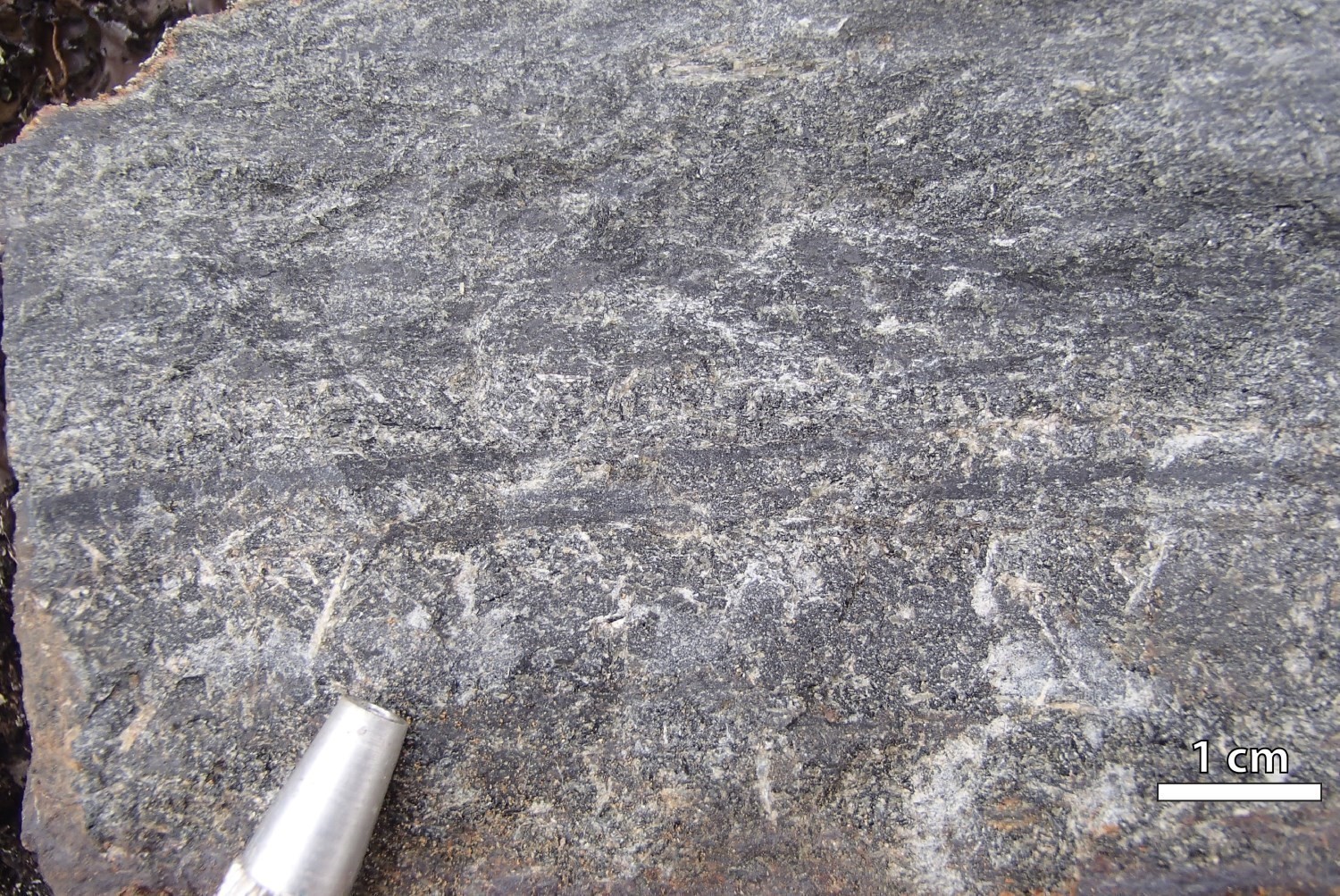 Peridotite and pyroxenite outcrops of the Sorbier Mafic-Ultramafic Suite can be easily identified in the field because of their significant positive relief. They form round hummocks a few metres high. Rocks are characterized by a rough and irregular orange-brown altered surface. In fresh exposure, they range from dark green to black.
Peridotite and pyroxenite are fine to medium grained and typically magnetic. These rocks may locally exhibit pronounced foliation on some outcrops and be rather massive on others. They are composed of green to colourless amphiboles (actinolite-tremolite and anthophyllite) in thin section, olivine, orthopyroxene, serpentine, talc, chlorite and magnetite. Accessory minerals observed locally are phlogopite, spinel, calcite and epidote.
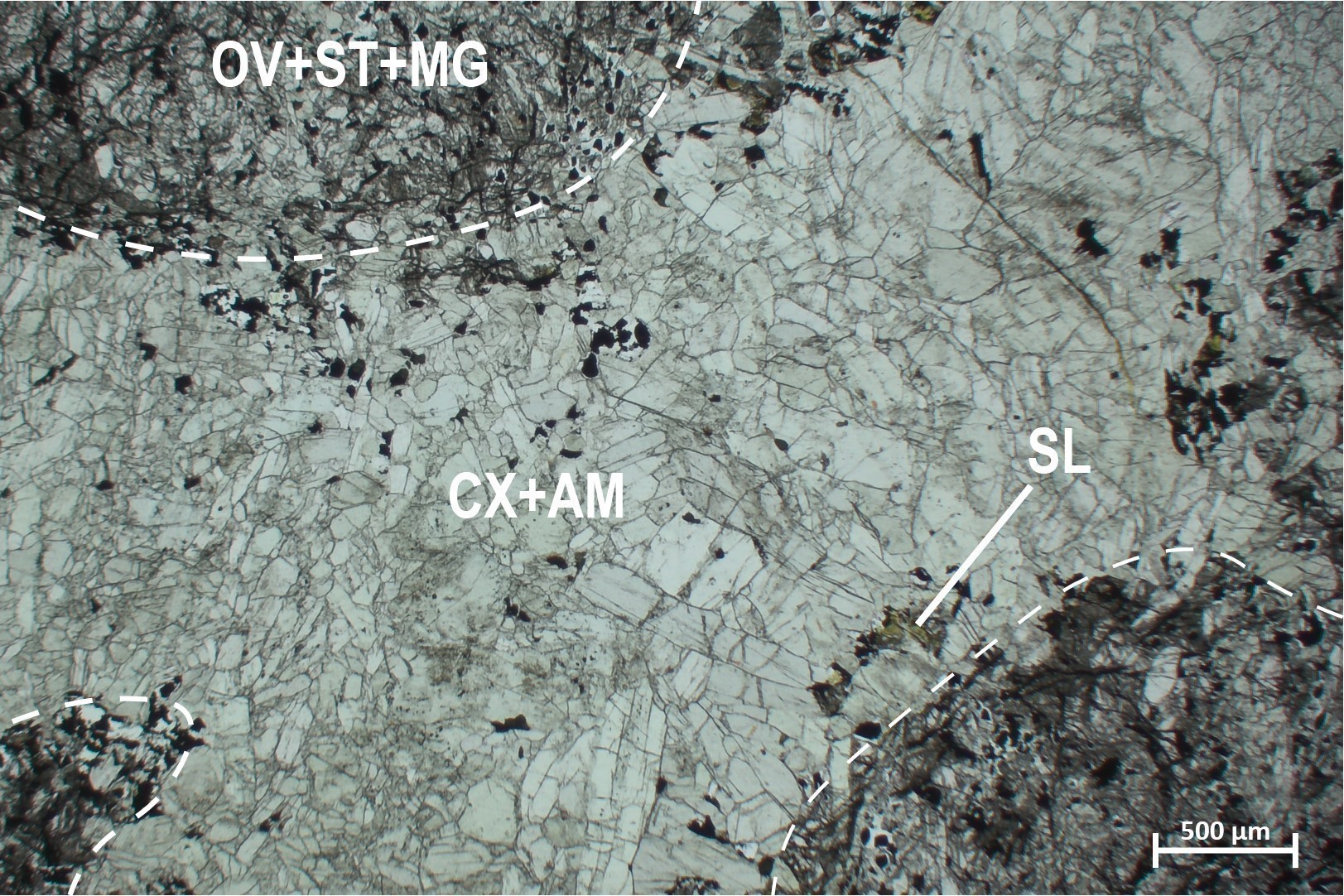
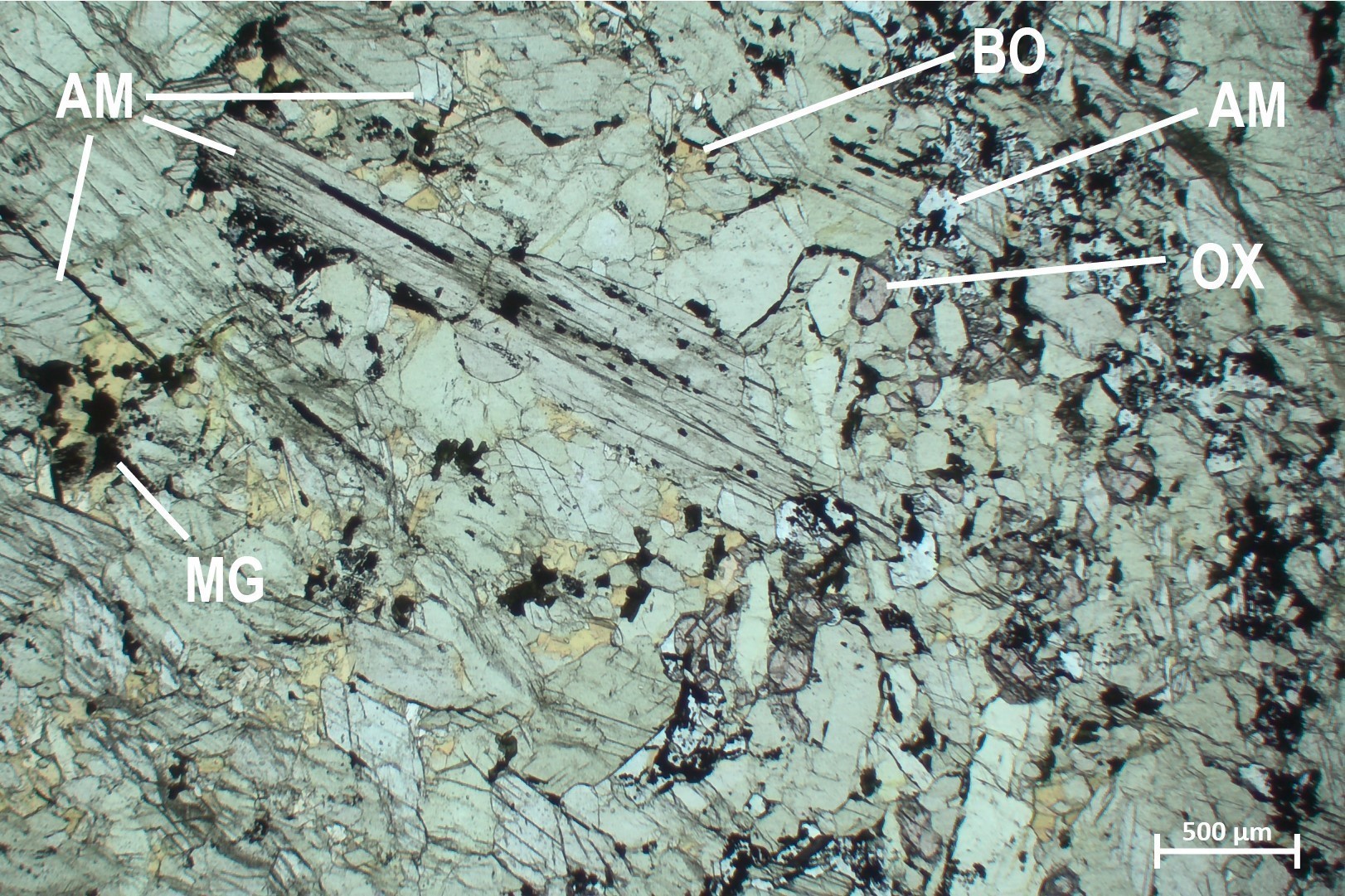 Two typical facies were identified in thin section. The most common facies has an igneous cumulate texture, defined by the recurrent presence of olivine crystals (relics) and orthopyroxene porphyroblasts. Olivine is generally replaced by serpentine and magnetite. Orthopyroxene may also be altered and replaced by chlorite and sericite assemblages. In some cases, deformed poikilitic crystals are interpreted as relics of orthophyroxene oikocrystals. The matrix of these rocks is generally granoblastic and composed of clinopyroxene, which is commonly amphibolitized to actinolite-tremolite. The second, less common, facies has little to no cumulate texture. The mineralogical composition is generally more heterogeneous and the mineralogical proportions vary greatly in thin section. A matrix rich in amphibole is predominantly observed, often accompanied by biotite. Amphibole in this facies also exhibits a rather variable relief in thin sections, suggesting a variation in amphibole composition. The characteristics of these two facies have been repeatedly observed within the same outcrop or on neighbouring outcrops (<50 m).
In these rocks, pyroxene was replaced by an actinolite-tremolite assemblage is thought to have occurred during the retrogressive metamorphic event. Tremolite is a syntectonic to post-tectonic mineral and is oriented at a certain angle relative to the Sn foliation. The outcrops’ brownish surface is covered by negative relief fractures containing serpentine, talc, tremolite and magnetite. These fractures are arranged in diamond patterns. Magnetite and serpentine veinlets are also visible within the peridotite facies.
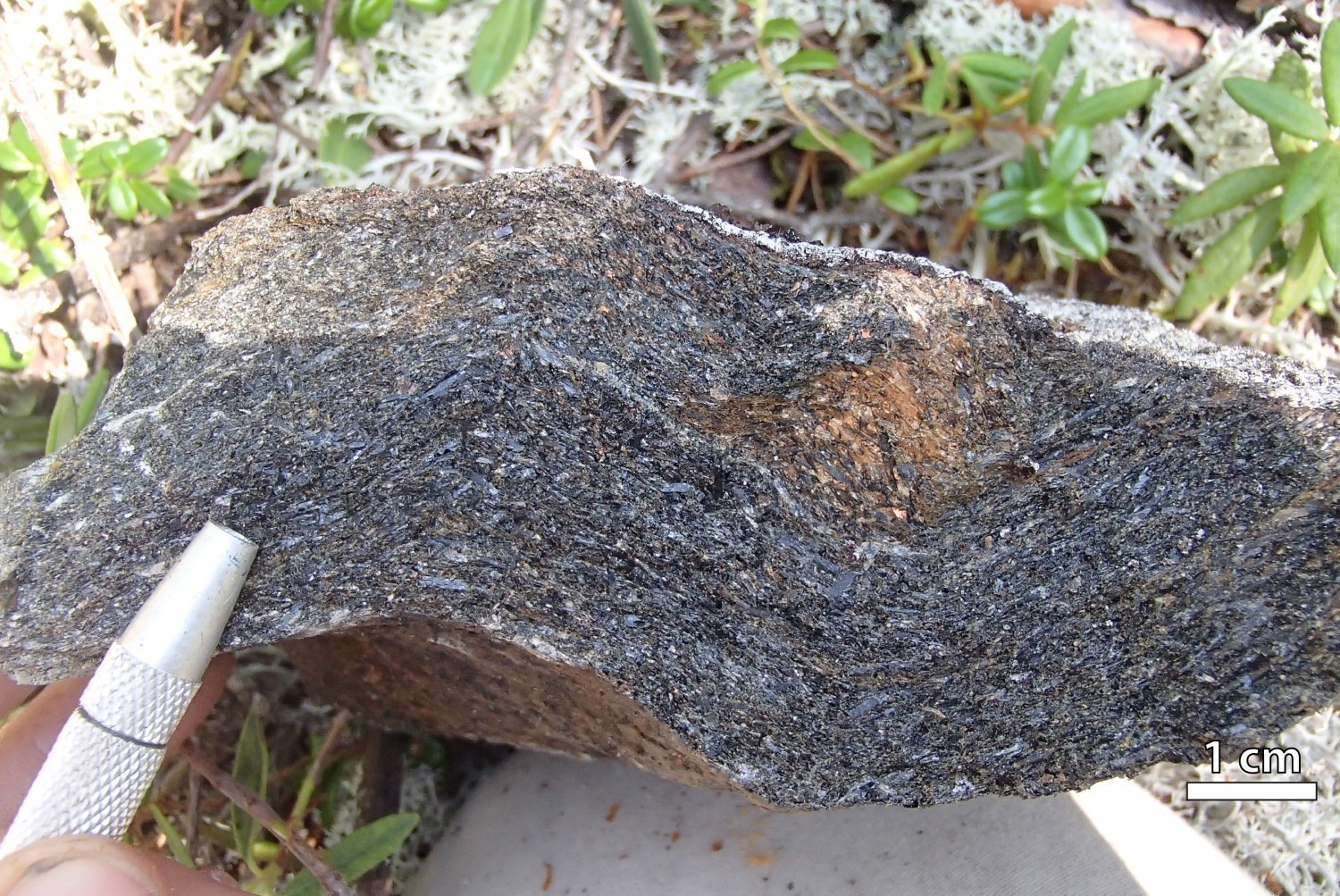
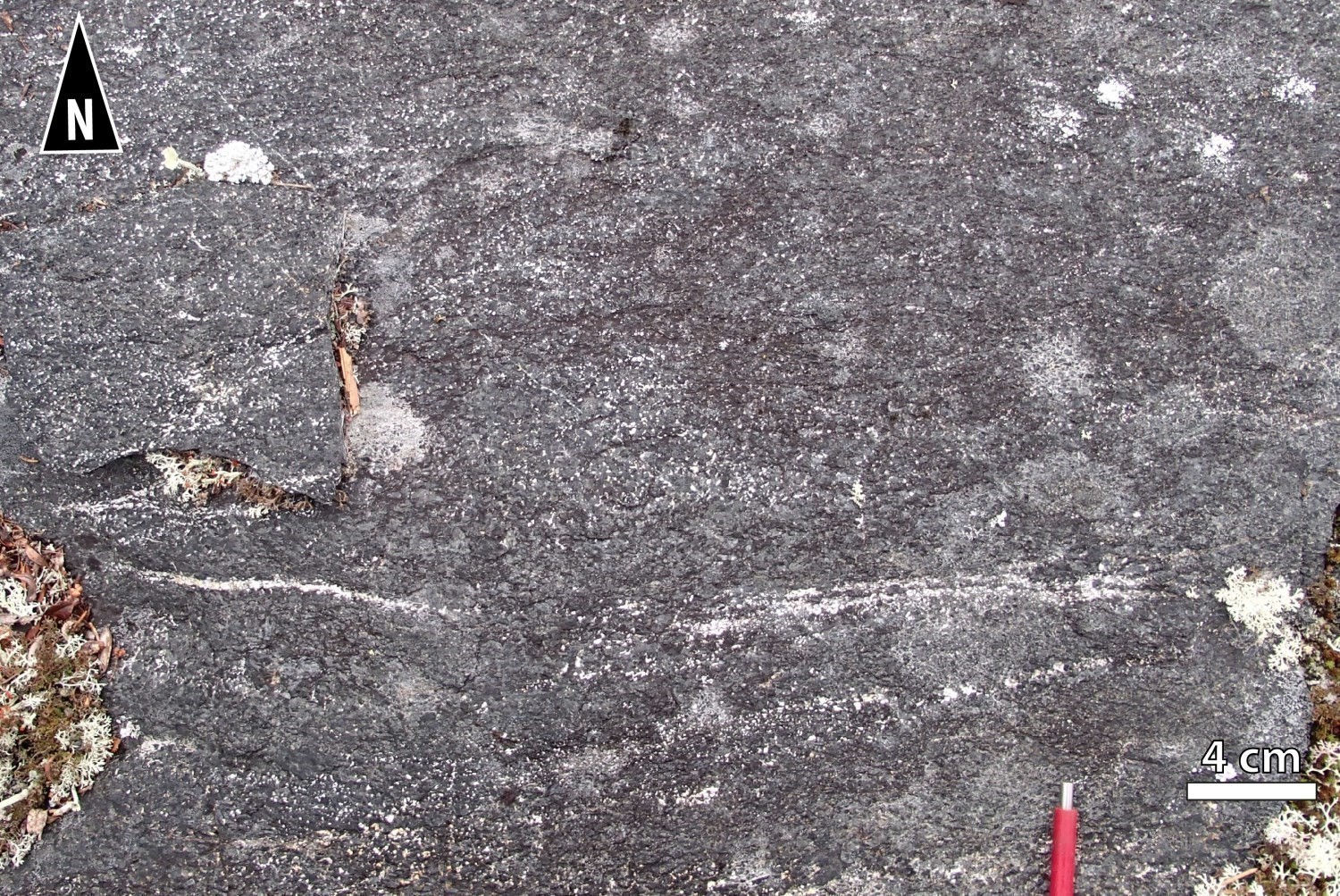
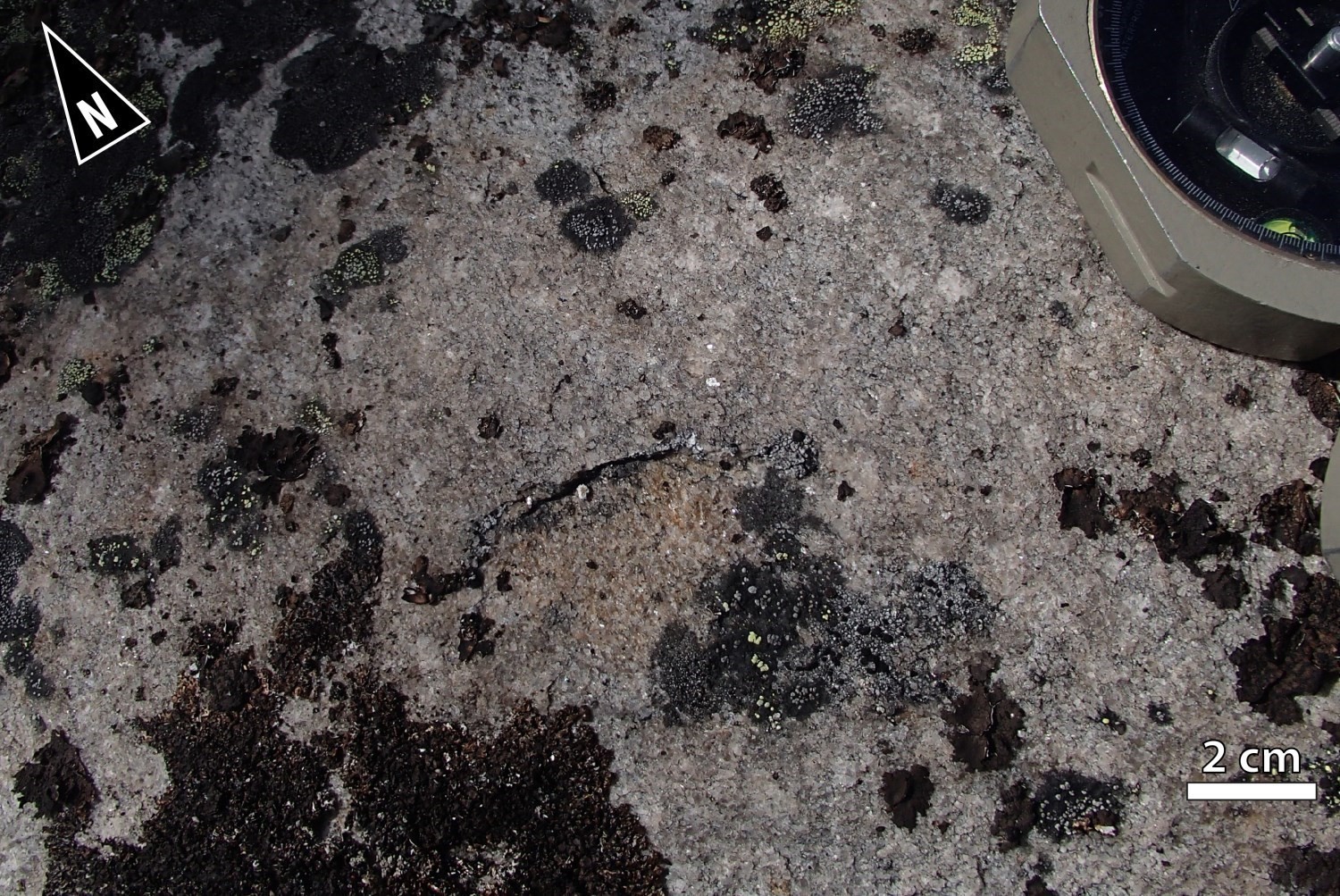 Hornblendite and gabbro are generally in diffuse contact. These rocks are dark green in fresh and altered patina, medium to coarse grained, subophitic, amphibolitized and generally foliated. The typical hornblendite and gabbro mineralogical assemblage includes hornblende, actinolite, biotite and plagioclase. Ferromagnesian minerals range in content from 60% to 90% for melanocratic gabbro and >90% for hornblendite. An outcrop of leucogabbro (18-OG-8049) was also observed.
Based on geochemical data by Beauchamp (2020), the normative composition (CIPW) of peridotite corresponds to lherzolite and that of pyroxenite to olivine websterite (Streckeisen, 1976). All analyzed rocks have rare earth element patterns normalized to CI chondrites (Palme and O’Neill, 2004) displaying a generally very weak or even flat decreasing slope. Negative anomalies in Nb-Ta and P are observed on the spider diagram normalized to the primitive mantle (McDonough and Sun, 1995).
Thickness and Distribution
The Sorbier Mafic-Ultramafic Suite consists of over forty small, elongated bodies (area <1 km², average 0.25 km²) scattered throughout sheets 33A02, 33A03 and 33A07, covering a total area of ∼12 km². These intrusions are generally distributed either along the Eastmain-Sorbier Shear Zone, around the Macleod Batholith (NE corner of sheet 33A03), or parallel to the volcanic rock bands of the Clauzel Group. Some intrusions have been mapped over distances of several kilometres (≤5 km) and 200 m to 300 m in width.
Dating
None.
Stratigraphic Relationship(s)
Rocks of the Sorbier Mafic-Ultramafic Suite intrude into metasedimentary rocks of the Prosper Formation and volcanic rocks from the Clauzel Group. These intrusive bodies have clearly undergone the main tectonic events of the Lake Cadieux area, since the regional Sn fabric is well developed. Locally, a few indeterminate felsic intrusions cut Sorbier Mafic-Ultramafic Suite outcrops (e.g., outcrop 18-MP-5146). They are also cut by the Mistassini Dyke Swarm (2515 ±3 Ma, 2503 ±2 Ma; Hamilton 2009; Davis et al., 2018) and Lac Esprit Dykes (2069 ±1 Ma, Hamilton et al., 2001).
It is important to note that the Sorbier Mafic-Ultramafic Suite could represent a deformed equivalent of the Dominique Ultramafic Suite. The occurrences observed in sheet 33A03 also show strong geochemical and petrographic similarities with rocks of the Chamic Mafic-Ultramafic Suite, located approximately 10 km south, and could be the result of a common magmatic event.
Paleontology
Does not apply.
References
Publications Available Through Sigéom Examine
BEAUCHAMP, A.-M., 2020. Géologie et potentiel minéral de la région du lac Cadieux, sous-provinces d’Opatica et d’Opinaca, Eeyou Istchee Baie-James, Québec, Canada. MERN; BG 2019-02, 2 plans.
CHARTIER-MONTREUIL, W., SAINT-LAURENT, C., 2024. Géologie de la région du lac Caulincourt, sous-provinces d’Opinaca et de La Grande, Eeyou Istchee Baie-James, Québec, Canada. MRNF; BG 2024-04, 2 plans.
DAVIS, D.W., LAFRANCE, I., GOUTIER, J., BANDYAYERA, D., TALLA TAKAM, F., GIGON, J., 2018. DATATIONS U-PB DANS LES PROVINCES DE CHURCHILL ET DU SUPÉRIEUR EFFECTUÉES AU JSGL EN 2013-2014. MERN; RP 2017-01, 63 pages.
HAMILTON, M.A., 2009. DATATION ISOTOPIQUE (U-PB) D’UN DIABASE DE L’ESSAIM DE DYKES MISTASSINI, QUÉBEC – U-PB ISOTOPIC OF A DIABASE DYKE OF THE MISTASSINI SWARM, QUEBEC. UNIVERSITY OF TORONTO, JACK SATTERLY GEOCHRONOLOGY LABORATORY. MB 2009-17, 13 pages.
HOCQ, M., 1985. GÉOLOGIE DE LA RÉGION DES LACS CAMPAN ET CADIEUX, TERRITOIRE-DU-NOUVEAU-QUÉBEC. MRN; ET 83-05, 190 pages and 4 plans.
Other Publications
HAMILTON, M.A., GOUTIER, J., MATTHEWS, W., 2001. U-Pb Baddeleyite Age for the Paleoproterozoic Lac Esprit Dyke Swarm, James Bay Region, Quebec. Geological Survey of Canada; Current Research 2001-F5, 8 pages. https://doi.org/10.4095/212672
MCDONOUGH, W.F., SUN, S.S., 1995. The Composition of the Earth. Chemical Geology; volume 120, pages 223-253. doi.org/10.1016/0009-2541(94)00140-4
PALME, H., O’NEILL, H.S.C., 2004. Cosmochemical Estimates of Mantle Composition. In: Treatise on Geochemistry (Holland, H.D. and Turekian, K.K. editors). Elsevier, Amsterdam, The Netherlands; volume 2, pages 1-38. doi.org/10.1016/B978-0-08-095975-7.00201-1
STRECKEISEN A., 1976. To Each Plutonic Rock its Proper Name. Earth-Science Reviews; volume 12, pages 1-33. doi.org/10.1016/0012-8252(76)90052-0
Suggested Citation
Ministère des Ressources naturelles et des Forêts (MRNF) Sorbier Mafic-Ultramafic Suite. Quebec Stratigraphic Lexicon. https://gq.mines.gouv.qc.ca/lexique-stratigraphique/province-du-superieur/suite-mafique-ultramafique de-sorbier_en [accessed on Day Month Year].
Contributors
|
First publication |
Anne-Marie Beauchamp, Eng., M.Sc. anne-marie.beauchamp@mern.gouv.qc.ca (redaction) Mehdi A. Guemache, P. Geo., Ph.D. (coordination); Patrice Roy, P. Geo., M.Sc. (critical review); Simon Auclair, P. Geo., M.Sc. (editing); Céline Dupuis, P. Geo., Ph.D. (English version); Ricardo Escobar Moran (HTML editing). |
|
Revision |
Charles Saint-Laurent, GIT, M.Sc. charles.st-laurent@mrnf.gouv.qc.ca; William Chartier-Montreuil, P. Geo. (redaction: 14/05/2025) Philippe Pagé, P. Geo., Ph.D. (coordination); Jérôme Lavoie, Eng., M.Sc. (critical review); Simon Auclair, P. Geo., M.Sc. (editing); André Tremblay (HTML editing); Catherine Tremblay (English version). |